
Indian benchmark indices closed mixed, with the Sensex gaining 113.61 points to 78,079.96 and the Nifty falling 40.10 points to 24,395.85, as elevated crude prices and ongoing geopolitical uncertainty in the Middle East made investors cautious.

Farmers under the Samyukta Kisan Morcha have initiated a week-long protest at the Chandigarh-Mohali border, demanding a minimum support price (MSP) based on the C2 plus 50 per cent formula, debt waivers, and opposing the proposed India-US trade deal, Electricity Amendment Bill, and Seed Bill. They also raised concerns about water depletion and sought resolutions based on riparian principles.

'The ethanol blended with petrol programme should not be halted or reconsidered.' 'India is not experiencing a structural sugar shortage, and the ethanol blending roadmap does not compete with food security or drive domestic price increases.'

Bangladesh has once again sought the extradition of former premier Sheikh Hasina from India during High Commissioner Dinesh Trivedi's first meeting with Prime Minister Tarique Rahman in Dhaka, amidst fresh strains in ties between the two countries following Hasina's controversial virtual media interaction in New Delhi.

Analysts predict that the Reserve Bank of India's interest rate decision, the evolving situation in West Asia involving the US-Iran conflict, and crude oil prices will be the primary factors influencing investor sentiment in the Indian stock market this week.

After four consecutive months of withdrawals, Foreign Portfolio Investors (FPIs) injected Rs 20,200 crore into Indian equities in July, driven by attractive valuations, improving corporate earnings, and a more favourable global environment.

The 42-year-old, who has had stints at Microsoft, Facebook and Twitter, made the announcement of leaving his role as Senior Policy Advisor for Artificial Intelligence in a post on X on Saturday.

"Our endeavour is to bring headline inflation in line with the target over the medium term," said RBI Governor Sanjay Malhotra, addressing concerns about the central bank's policy stance and economic outlook.

'Every period of excessive optimism eventually gives way to a correction, while periods of extreme pessimism often create the best investment opportunities.'

The Reserve Bank of India (RBI) and the central government have introduced a package of measures, including tax exemptions for FPIs on government securities and a concessional foreign-exchange swap facility, aiming to attract up to $50 billion in foreign capital. This initiative is designed to strengthen India's balance of payments and potentially cover the projected BoP gap for FY27.

'If investors are trusting a new establishment in Tamil Nadu, it speaks a lot of the state's investment climate.'
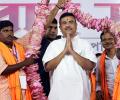
West Bengal's Bharatiya Janata Party government has moved to institutionalise its "detect, delete and deport" policy by directing all district administrations to set up "holding centres" for suspected illegal foreigners and foreign prisoners awaiting repatriation -- a step that appeared to give administrative shape to one of the party's most potent political themes in the state.
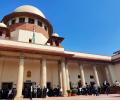
A bench comprising Chief Justice DY Chandrachud and Justices JB Pardiwala and Manoj Misra said Indian firms, involved in the export of arms and equipment to Israel, may be sued for breach of contractual obligations if they are stopped by it from supplying.

Telangana Chief Minister A Revanth Reddy's planned visit to the United States has been denied political clearance by the Ministry of External Affairs (MEA), citing non-conformity with laid down norms, forcing him to cancel the US leg of his 'TelanganaRising' delegation tour and return to Hyderabad earlier than planned.

The announcement comes after a massive fire ripped through the Flourish Stay B&B on Wednesday morning, leaving 21 people dead, including 11 foreign nationals, and several injured.

Indian stock market indices closed on a mixed note, with the Sensex gaining 374 points driven by buying in Reliance Industries and ICICI Bank, while the Nifty remained flat. This divergence is attributed to a new Closing Auction Session (CAS) mechanism introduced by stock exchanges, impacting market liquidity and price discovery.

Fitch Ratings has affirmed India's sovereign credit rating at 'BBB-' with a stable outlook, acknowledging robust growth prospects and strong external finances. However, the agency highlighted concerns over elevated government debt, lagging structural metrics, and potential fiscal spending pressures due to rising youth unemployment.

In her address to the nation on the eve of the country's 80th Independence Day, the president stressed that just as government and society remain united to ensure national security, everyone must contribute through joint and concerted efforts to safeguard the present and future of students.

Indian benchmark indices Sensex and Nifty ended flat on Tuesday, with the Sensex dipping nearly 70 points, as investor sentiment turned cautious ahead of crucial global central bank policy meetings and a significant sell-off in Asian markets.

The Reserve Bank of India (RBI) maintained its key policy rates for the fourth consecutive time, keeping the repo rate at 5.25 per cent, while the benchmark BSE Sensex closed 152 points higher in a volatile session, recovering from an intraday dip.
Indian benchmark indices closed marginally higher, with the Sensex gaining over 43 points and the Nifty remaining flat, as a spike in crude oil prices due to geopolitical uncertainties tempered risk appetite.
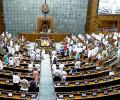
The Congress party is set to challenge the Modi government on a range of critical issues, including alleged theft of Ram temple donations, 'systemic corrosion' of the education system, and constitutional amendment bills related to delimitation and dismissal of ministers, during the upcoming Monsoon Session of Parliament.

One in 10 employees at California-headquartered technology unicorns now work from India, surpassing other major US tech hubs and several countries, driven by US visa restrictions and substantial cost savings.

In a significant victory against international drug trafficking, India has secured the return of fugitive drug kingpin Virender Singh Basoya from the UAE.

A coalition of 25 Democratic-ruled US states has filed a lawsuit against the Trump administration's decision to impose new tariffs on 60 economies, including India. The states contend that these tariffs, ostensibly aimed at combating forced labour, are illegal taxes that will raise costs for consumers and businesses, and were implemented without proper legal justification.

The US is reportedly considering a USD 100,000 fee for Optional Practical Training (OPT) visas, which allow international students to work in the US after graduation. This move by the Trump administration follows a rejected H1-B visa fee proposal and could significantly impact foreign graduates and tech companies. The Department of Homeland Security is also exploring a USD 100,000 bond for green card applicants.

US President Donald Trump has signed two executive orders aimed at cracking down on 'birth tourism' and limiting eligibility for birthright citizenship, weeks after the Supreme Court rejected a similar directive.

Underlining that students are the "architects of India's future," President Droupadi Murmu on Friday said the government is taking comprehensive steps to reform public examinations to completely curb paper leaks and unfair means, making the system transparent, secure, and trustworthy.
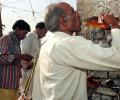
Two individuals have died and 19 others have been hospitalised in Gujarat's Bhavnagar district after consuming spurious liquor. Authorities have detained four bootleggers and are investigating the source of the duplicate Indian Made Foreign Liquor (IMFL) bottles, which are believed to have originated from Madhya Pradesh. Gujarat is a dry state where alcohol is banned.

Educationists and parents are raising concerns about the CBSE's implementation of the three-language policy for Class 9, questioning the timing and preparedness of schools.

'The prime minister has given us the task of taking at least 300 satellites to orbit in the next five to six years.'

Indian benchmark indices Sensex and Nifty recorded sharp gains, rising over 1 per cent, driven by strong performances in IT stocks, HDFC Bank, and renewed foreign fund inflows, despite mixed global cues and elevated crude oil prices.

US Vice-President J D Vance's unexpected phone call to Prime Minister Narendra Modi on August 8 has ignited speculation about a potential diplomatic overture, possibly seeking India's support amidst the escalating US-Iran conflict and a shifting global power landscape, suggests Ambassador M K Bhadrakumar.

'The Atomic Energy Commission has approved the FDI policy and it is going in for ministerial consultations.'
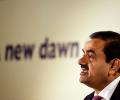
A US federal judge has permanently dismissed the criminal securities-fraud case against Adani Group chairman Gautam Adani and his nephew Sagar, closing nearly two years of prosecution without a trial. Gautam Adani stated, "Truth has prevailed," in response to the ruling.

Narendra Modi's promise to allow states a bigger say in strategising and building foreign policy is unexceptionable, says TP Sreenivasan.

Polish envoy Piotr Antoni Switalski stated that Poland stands with India in the fight against terrorism, asserting his country's support for India's right to pursue terrorists globally, while also highlighting strong cultural and defence ties between the two nations.

Japan is deepening its defence relationship with India while simultaneously expanding its economic, infrastructure and security engagement with countries around India -- particularly Bangladesh. The result is an emerging Japanese conception of South Asia in which India remains the strategic anchor, but the geography surrounding India is becoming increasingly important, points out Varun Arya.
The Congress party has criticised the Modi government on the first anniversary of the Pahalgam terror attack, stating that Pakistan has gained global respectability due to the failure of Prime Minister Narendra Modi's foreign policy.

The CBSE has mandated the study of three languages, including at least two native Indian languages, for Class 9 students starting July 1, aligning with the National Education Policy (NEP) 2020 and the National Curriculum Framework for School Education (NCF-SE) 2023.
